Understanding marks on beer labels
Beer labels can carry many different logos and marks. Some are EU legal protections tied to geography or tradition. Others are certifications granted by independent bodies, membership marks from trade associations, or competition awards. Knowing what each type of mark actually means — and what it doesn't — helps you interpret labels more accurately.
EU geographical indication logos
The EU operates three quality schemes that protect product names and traditions. All three can appear on beer labels, though PGI is by far the most common for beer. The UK operates equivalent schemes under the same names following Brexit.
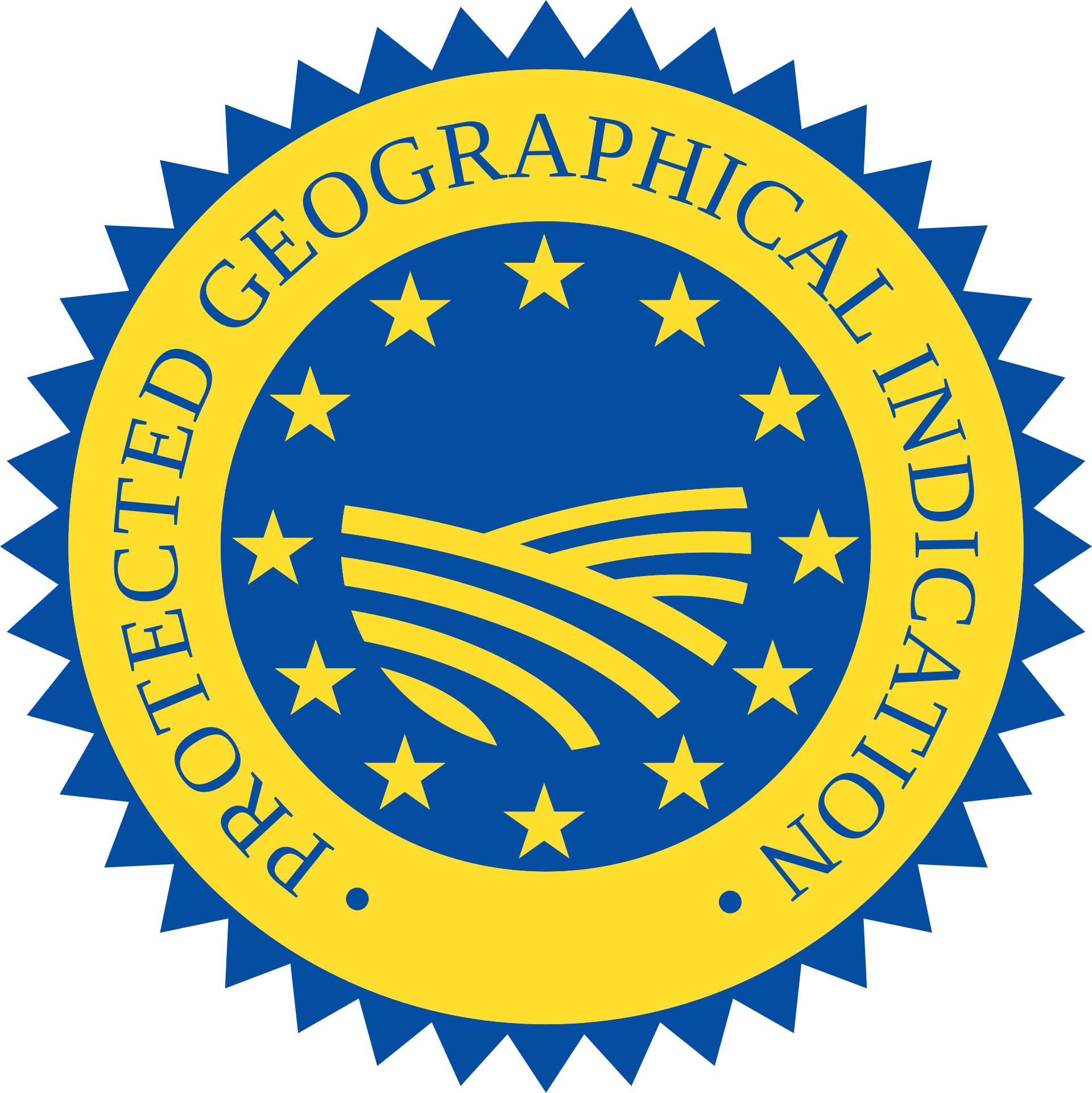
PGI — Protected Geographical Indication
A PGI means at least one stage of production, processing, or preparation takes place in the defined geographical area, and the product has a specific quality, reputation, or characteristic attributable to that origin. PGI is the most common EU protection applied to beer.

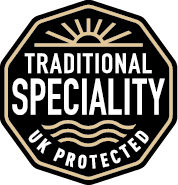
TSG — Traditional Speciality Guaranteed
A TSG protects a traditional production method or recipe rather than a geographical origin. The product does not need to come from a specific place — it just needs to be made in the traditional way defined in the specification. Finnish sahti, the traditional farmhouse ale brewed with juniper and often rye, holds TSG status. The same scheme appears under different abbreviations depending on the language: ETG in Spanish and Italian, STG in Portuguese. Following Brexit, the UK operates its own equivalent scheme using the same TSG name and a similar logo.
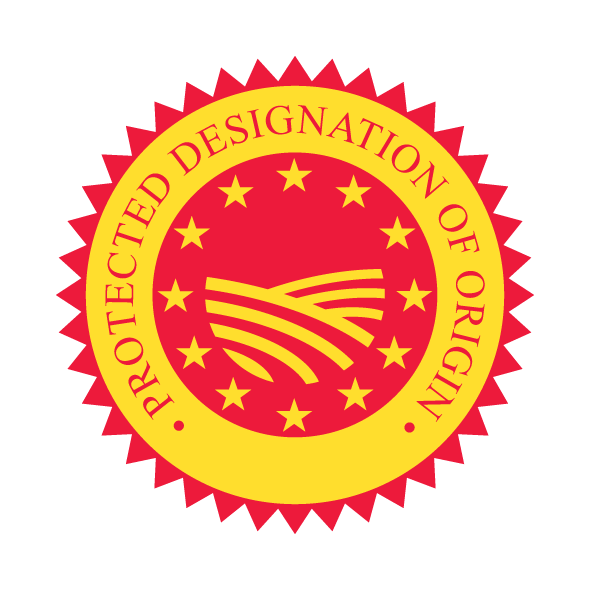
PDO — Protected Designation of Origin
A PDO is a stricter designation: all stages of production, processing, and preparation must occur in the defined area, and the quality or characteristics must be essentially or exclusively due to that geographical environment. PDO is less common for beer than PGI.
Examples of EU-protected beer
Bayerisches Bier (PGI – Germany)
Beer brewed in Bavaria according to the Reinheitsgebot purity requirement.
Münchner Bier (PGI – Germany)
Beer brewed within the city of Munich.
Kölsch (PGI – Germany)
A pale, top-fermented ale brewed in Cologne.
Berliner Weisse (PGI – Germany)
A sour wheat beer brewed in Berlin.
České pivo (PGI – Czech Republic)
Beer brewed in the Czech Republic following Czech brewing traditions.
Budějovické pivo (PGI – Czech Republic)
Beer from the České Budějovice (Budweis) area.
Oude Geuze / Vieille Gueuze (TSG – Belgium)
A traditional Belgian blend of aged lambic beers, barrel-aged for at least one year on average, with the oldest component having spent at least three years in wooden barrels.
Oude Kriek / Vieille Kriek (TSG – Belgium)
A traditional Belgian lambic blended with cherries or other fruit, with an average age of at least one year and the oldest component barrel-aged for at least one year.
Brewery certification marks
Some logos on beer labels are certifications governed by their own rules and certifying bodies, distinct from EU geographical indications.

Authentic Trappist Product
A certification controlled by the International Trappist Association, not an EU geographical indication. To display it, the beer must be brewed within the walls of a Trappist monastery, under monastic supervision, with profits going primarily to the monastery or to charitable causes. It is not tied to a specific country or region — qualifying breweries exist in a handful of European countries, with most in Belgium.
Learn more about the ATP label
Certified Belgian Abbey Beer
A certification managed by the Belgian Brewers association, distinct from the Trappist designation. To use it, a beer must have a genuine, documented connection to a recognised Belgian abbey — typically through a licensing agreement where the abbey receives a share of revenue — and the recipe must be approved by the abbey. Unlike Trappist, the beer does not need to be brewed on monastery grounds. The certification applies only to beers with a link to a specific Belgian abbey.
Learn more about Certified Belgian Abbey BeerIndependent brewer logos
Some beer labels carry logos indicating the brewery is a member of an independent brewer association. These are membership marks.
Independent brewer logos generally mean the brewery has declared it is not owned or controlled by a large international brewing group, and is a member of a national trade association representing independent brewers. They say something about ownership structure — not about brewing method, ingredients, or style. National associations of independent brewers exist across many European countries, and some issue logos or certification marks that member breweries may display on their packaging. Definitions of "independent" vary between organisations. Common criteria include ownership thresholds (for example, not more than a set percentage owned by a large brewer or outside investor) and sometimes production volume caps. The precise criteria behind any specific logo are set by the issuing association and available on their website.
Example: Marchio Indipendente Artigianale (Italy)
In Italy, Unionbirrai issues the Marchio Indipendente Artigianale (Independent Craft Mark) to member breweries that meet its criteria for independence and craft brewing. The mark is owned and managed by Unionbirrai, the main association of Italian craft brewers, and its conditions are published on their website.
Learn more about the Marchio Indipendente ArtigianaleWhat to keep in mind
- These are membership marks — they indicate ownership status
- The definition of "independent" differs by organisation and country
- Absence of a logo does not mean the brewery is not independent — membership is voluntary
- To verify membership, check the issuing association's member directory
Competition awards and medals
Many beer labels display awards from competitions — "Gold Medal", "Champion Beer", "Best IPA", and similar claims. These can help identify quality beers, but it's important to understand what they mean.
Understanding competition awards
Not all beer competitions have the same standards. Some are professionally judged with strict blind-tasting protocols, while others may be more promotional events. When you see a competition award on a label, consider:
- Is the competition name clearly stated, or just "Award Winner"?
- Can you verify the competition actually exists and its judging standards?
- Is there a year or specific category mentioned?
EBCU-endorsed competitions
EBCU endorses competitions that meet essential standards including blind judging (judges don't know which beer they're tasting), independent judging (brewers don't judge their own beers), published style descriptions, and transparent judging procedures.
Awards from EBCU-endorsed competitions indicate the beer has been professionally evaluated against clear standards.
View EBCU-endorsed competitionsVegan labels
There is no EU-wide standard for vegan labelling on beer. A beer may carry a certified vegan mark (such as the Vegan Society trademark or the V-Label), a simple text statement like "suitable for vegans", or no claim at all — even if the beer happens to be free from animal-derived inputs.
Why it comes up for beer
Traditional brewing sometimes uses animal-derived processing aids to clarify the beer. Isinglass (from fish swim bladders) and gelatin are common examples. These are processing aids rather than ingredients, so they may not appear on the label — but they are relevant to vegan and vegetarian consumers. If you need to be certain, check the brewer's website or contact them directly.
What to keep in mind
- There is no single official EU vegan standard — certification schemes are run by private organisations
- A "vegan" text claim on the label is the brewer's own statement, not third-party verified
- No vegan mark does not necessarily mean the beer is not vegan — many brewers simply don't seek certification
- EU rules under the Directive on Empowering Consumers for the Green Transition (2024/825) require sustainability labels to be based on approved certification schemes — this applies to any vegan or eco claim presented as an environmental or sustainability credential
Organic certification
Organic beer is brewed using ingredients — malt, hops, and any adjuncts — grown without synthetic pesticides or artificial fertilisers, and certified under an approved organic scheme. Organic labelling is one of the more tightly regulated categories you'll find on a beer label: unlike some other marks, it carries a legal definition and mandatory certification requirements.

The EU organic logo
Under EU Regulation 2018/848, any product marketed as "organic" in the EU must carry the EU organic logo — a green leaf formed by white stars — and at least 95% of its agricultural ingredients must be certified organic. The label must also show the code of the certifying inspection body responsible for the producer.
Many EU member states also operate national organic logos alongside the EU mark, issued by government bodies or approved certifiers. These indicate compliance with the same standard or a stricter national one. For example, Germany has a hexagonal "Bio" seal, France an "AB" (Agriculture Biologique) mark, and Denmark a red "Ø-mærket". National logos may appear alongside the EU organic logo — but the EU logo remains mandatory whenever an organic claim is made within the EU.
What to keep in mind
- The EU organic logo is legally controlled — it is not a voluntary marketing claim
- National logos (Germany "Bio", France "AB", Denmark "Ø-mærket", etc.) indicate the same or stricter certification and may appear alongside the EU logo
- Terms like "natural", "craft", or "made with natural ingredients" are not the same as certified organic
- Organic certification covers agricultural ingredients — not packaging, brewing equipment, or process
Recycling marks
Beer cans and bottles carry various recycling-related symbols, but these marks differ in what they actually mean — and whether a container is collected and recycled depends on local infrastructure, which varies by country.
Green Dot (Der Grüne Punkt)
Common across much of the EU. Indicates the producer has financially contributed to a packaging recovery scheme — not that the packaging itself is recyclable or will be recycled.
Recycling symbol (chasing arrows)
Indicates the material is recyclable in principle. Whether it is actually collected and recycled depends on what your local waste system accepts. A symbol on the packaging is not a guarantee the item will be recycled.
Material identification codes
Numbers or abbreviations (such as "AL" for aluminium, or a number inside a triangle for plastic types) that identify the material to help with sorting. These are not recycling guarantees — they are sorting aids.
Cans vs bottles
Aluminium cans and glass bottles follow different recycling streams and often carry different symbols. In countries with deposit return schemes, deposit-eligible containers may carry additional marks — see the Deposits section below.
Deposits
Many European countries operate deposit return schemes (DRS) for beverage containers. When you buy a drink in a deposit-eligible container, you pay a small surcharge which is refunded when you return the empty can or bottle to a designated return point.
Schemes differ significantly by country — in what containers are covered, how much the deposit is, and where you can return them. Some countries cover only plastic bottles; others include aluminium cans and glass. Cans and bottles sometimes carry different deposit amounts within the same scheme.
What to look for on the label
- Country-specific deposit text or logos — for example "Pfand" (Germany), "Pant" (Scandinavia), "Re-turn" (Ireland)
- A stated deposit value (e.g. "0,25 €")
- Scheme-specific barcodes used at automated return machines
What happens to returned containers
Not all deposit schemes work the same way once you return the container. There are two broad models:
Refillable containers
In some countries, particularly for glass bottles, returned containers are washed and refilled. Germany and several other European countries operate large refillable bottle systems alongside their deposit schemes. These are genuinely reused, not just recycled.
Single-use containers collected for material recovery
In other schemes, the deposit simply ensures that containers are returned for recycling rather than ending up as litter. Returned containers are crushed or shredded and the material processed. Glass is typically broken down into cullet and melted for new glass. Aluminium is melted and reused in new aluminium products — the material is highly recyclable and can go back into new cans, though it may also be used in other aluminium applications depending on local processing.
Imported beer
Beer imported from another country may carry a deposit mark from its country of origin that is not valid where you bought it — and vice versa. If you are unsure whether a container is eligible for return in your country, check with the retailer or your national scheme's website.
Deposit schemes are expanding across Europe
The EU's new Packaging and Packaging Waste Regulation (PPWR), which entered into force in February 2025, requires all EU member states to establish deposit return schemes for plastic and metal beverage containers by 2029, with a 90% collection target. EBCU is actively following developments in this area.