Who made it and where?
When you read a beer label, you often want to know two related things: who is responsible for this beer, and where was it actually brewed? These questions are related but not always the same. A brand owner might be in one country while the beer is brewed in another. Understanding the difference helps you interpret what you find on the label.
Common phrases explained
"Brewed by" or "Brewed at"
This indicates the actual brewery that produced the beer. The brewery named is where the brewing happened. This is the most direct statement of origin.
"Brewed for" or "Produced for"
This means the beer was contract-brewed. Another brewery made the beer on behalf of the brand owner. The brand owner typically designs the recipe and owns the brand, but doesn't own the production facility. This is a common and legal practice, but the actual brewing location isn't stated.
"Distributed by" or "Imported by"
This tells you who's handling distribution or import, not who brewed the beer. The distributor may have no connection to the brewing process. You'll need to look elsewhere for producer information.
"Produced in [Country]"
This indicates the country of production but not the specific brewery. A beer "produced in Belgium" could be made by any of hundreds of breweries.
What EU law requires on labels
EU law requires:
- The name and address of the food business operator (producer, packer, or importer)
- Country of origin (in most cases)
However, the address shown might be a head office, not the brewing facility. A beer might list a Copenhagen address while being brewed in Belgium.
Contract brewing isn't bad
Contract brewing is a legitimate business practice. Many excellent beers are contract-brewed, and many breweries both brew their own brands and produce beers for others. The issue isn't the practice itself, but clarity about who made what.
Finding the actual brewing location
What to look for
- Look for "brewed by" or "brewed at" to find the actual producer
- If it says "brewed for", the actual brewery is different from the brand
- A brewery name with a full physical address — this is often the clearest indicator
- Batch codes that include facility identifiers
- EU geographical indication logos (PGI/PDO) — see Marks, logos & certifications
Common misleading patterns
Location-themed branding
A beer with a German-sounding name, German flag imagery, and "German-style lager" text might be brewed anywhere. Unless it says "brewed in Germany", don't assume.
Historic brewery claims
"Established 1847" or similar claims refer to the brand's history, not necessarily continuous production at the original site. The current production might be elsewhere entirely.
Corporate address vs brewing address
The required address might be a corporate headquarters, not the brewery. Look specifically for brewing location information, not just any address.
Common scenarios
Brand vs brewery ownership
Many beer brands that appear independent are owned by larger brewing groups. The label might feature a small brewery's name and story, while the beer is actually produced at a facility owned by a multinational. This isn't necessarily disclosed on the label.
Multi-site production
Some brands are produced at multiple locations. A beer might be brewed in one country for sale there, and licensed or contract-brewed elsewhere for other markets. The "same" beer can taste different depending on where it was actually made.
Nomad or "cuckoo" brewing
Some brewers don't own their own equipment but rent time at other breweries. They may be present during brewing and use their own recipes, or they may simply contract out production. Labels typically say "brewed for" or "brewed by [brand] at [location]". You may also see the term "gypsy brewing" used for this practice — this term can be considered offensive and is best avoided.
Good practice example
Clear producer information helps consumers make informed choices. Here's an example of transparent brewery identification in the on-trade:
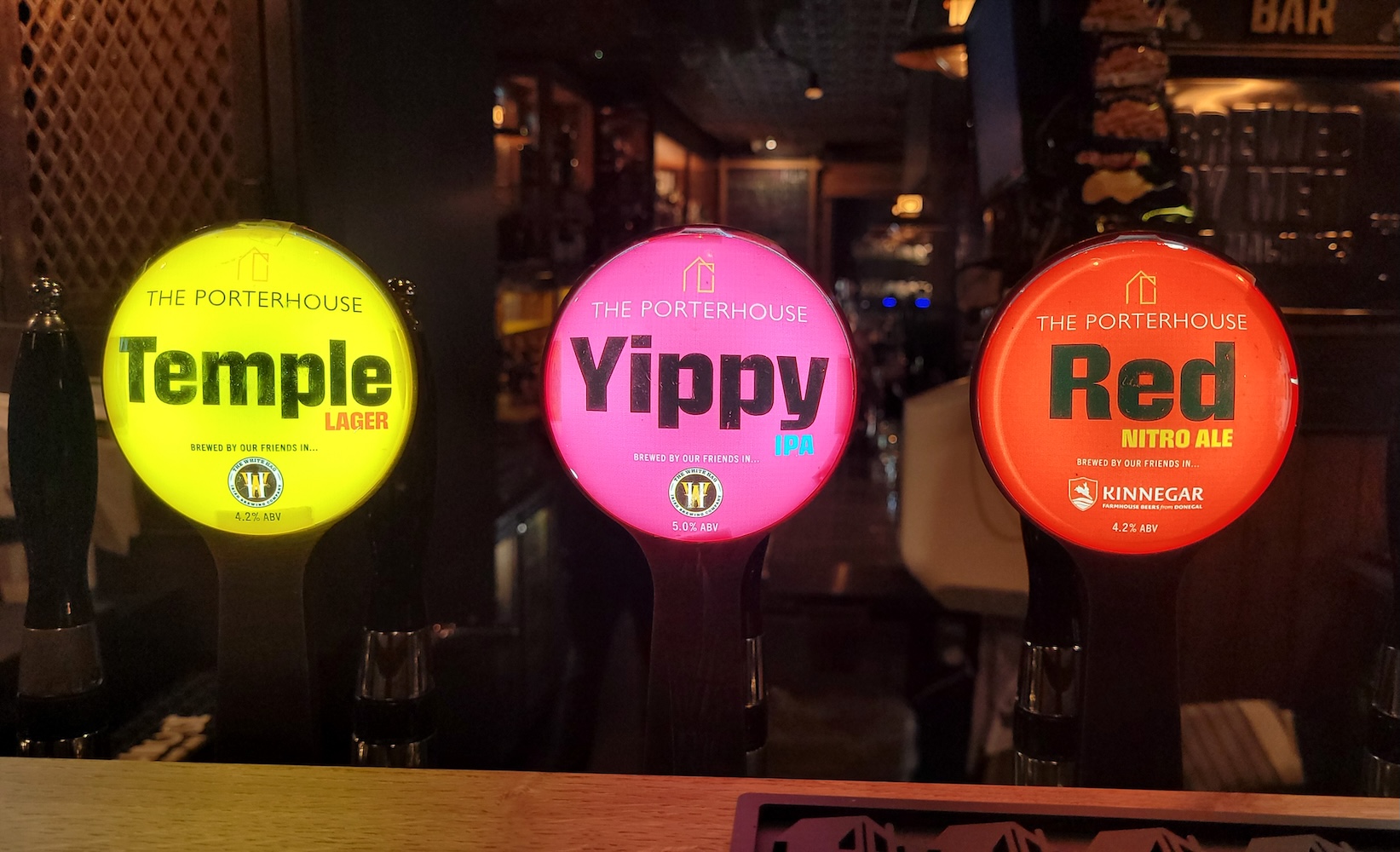
Example: Porterhouse tap badges clearly showing the brewery of production for each beer.
If the label isn't clear
If you can't determine who actually brewed a beer from the label:
- Search online for the brand name plus "brewery" or "brewed by"
- Check the brand's website for production information
- Look for batch code formats that might indicate the facility
- Ask the retailer or bar staff