
How storage affects beer
Beer quality can degrade due to temperature, light, and time. Understanding how to store and handle beer helps you get the best experience from what you buy.
Storage basics
Temperature
Cool, consistent temperatures are best for most beers. Refrigeration (4-7°C) is ideal for hop-forward and session beers. Cellar temperature (10-13°C) works for stronger ales. Avoid temperature swings and warm storage.
Light
Light causes "skunking" - a chemical reaction that produces unpleasant flavours. Brown bottles offer some protection; green and clear bottles offer less. Cans block all light. Store beer away from direct light.
Position
Store bottles and cans upright, not on their side. This minimises oxidation and keeps sediment at the bottom where it belongs. The exception is corked bottles for long-term aging, which may benefit from horizontal storage to keep corks moist.
Sediment and bottle conditioning
Many craft beers and traditional styles contain sediment - yeast and proteins that settle at the bottom. This is normal and not a flaw.
- Bottle-conditioned beers have live yeast that carbonates the beer naturally in the bottle
- Sediment typically has a bready, yeasty flavour
- Some people enjoy pouring the sediment; others prefer to leave it
Pouring bottle-conditioned beer
- Store upright before opening to let sediment settle
- Pour slowly and steadily in one continuous motion
- Stop pouring when sediment reaches the neck (if you want clear beer)
- Or swirl and pour all of it (traditional for some Belgian styles)
Cask beer
Cask beer (real ale) works on the same principle as bottle-conditioning — live yeast continues fermenting in the serving vessel, producing natural carbonation without external gas. Unlike bottled or canned beer, cask is a draught product managed entirely by the pub cellar. For a full explanation of how cask differs from keg and what to look for when ordering, see ordering beer in bars and restaurants.
Serving temperature
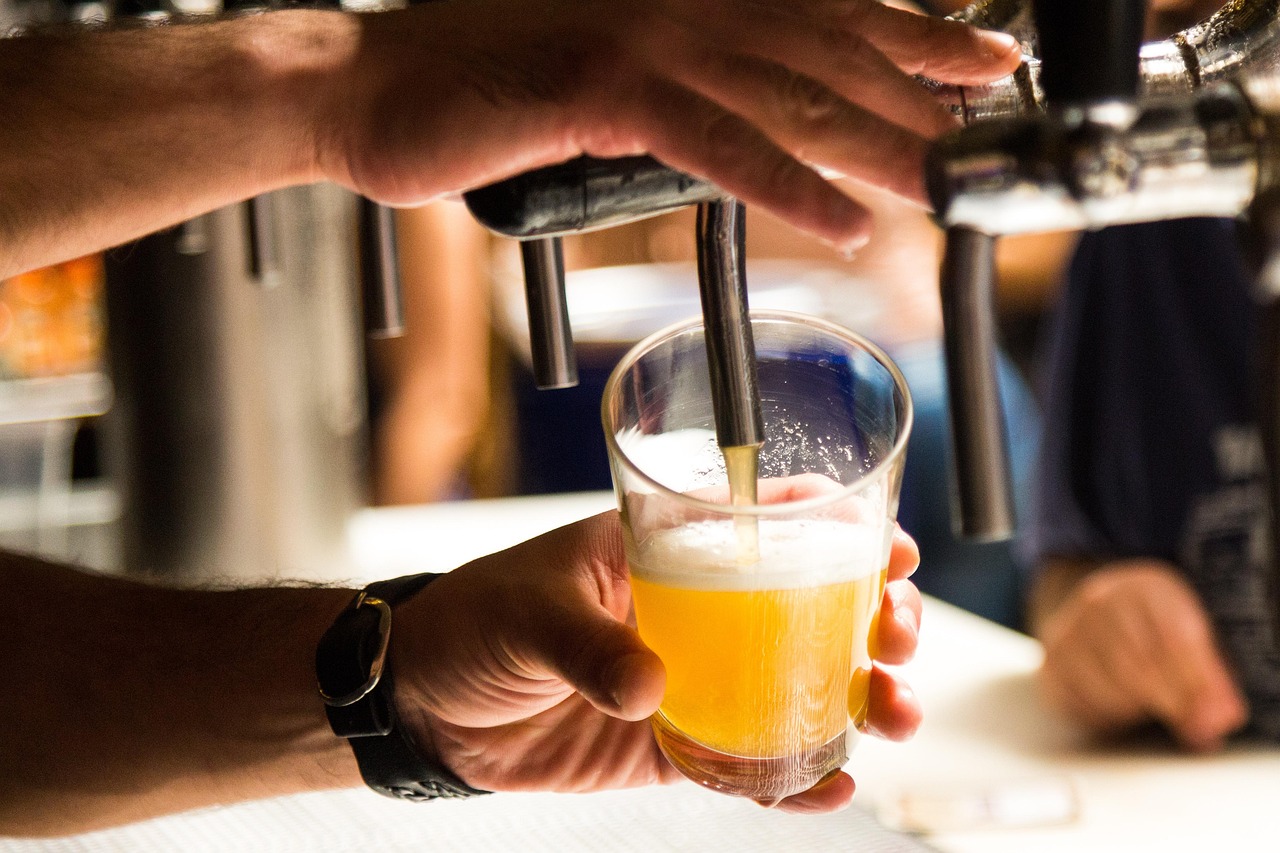
Proper serving technique and temperature help you get the best from your beer.
Serve cold (4-7°C)
- Lagers and pilsners
- Wheat beers
- Session IPAs
- Light, refreshing styles
Serve cool (8-12°C)
- IPAs and pale ales
- Amber and brown ales
- Porters and stouts
- Belgian ales
Note
This page is a draft. More detailed serving suggestions and troubleshooting information will be added.